
 Shift News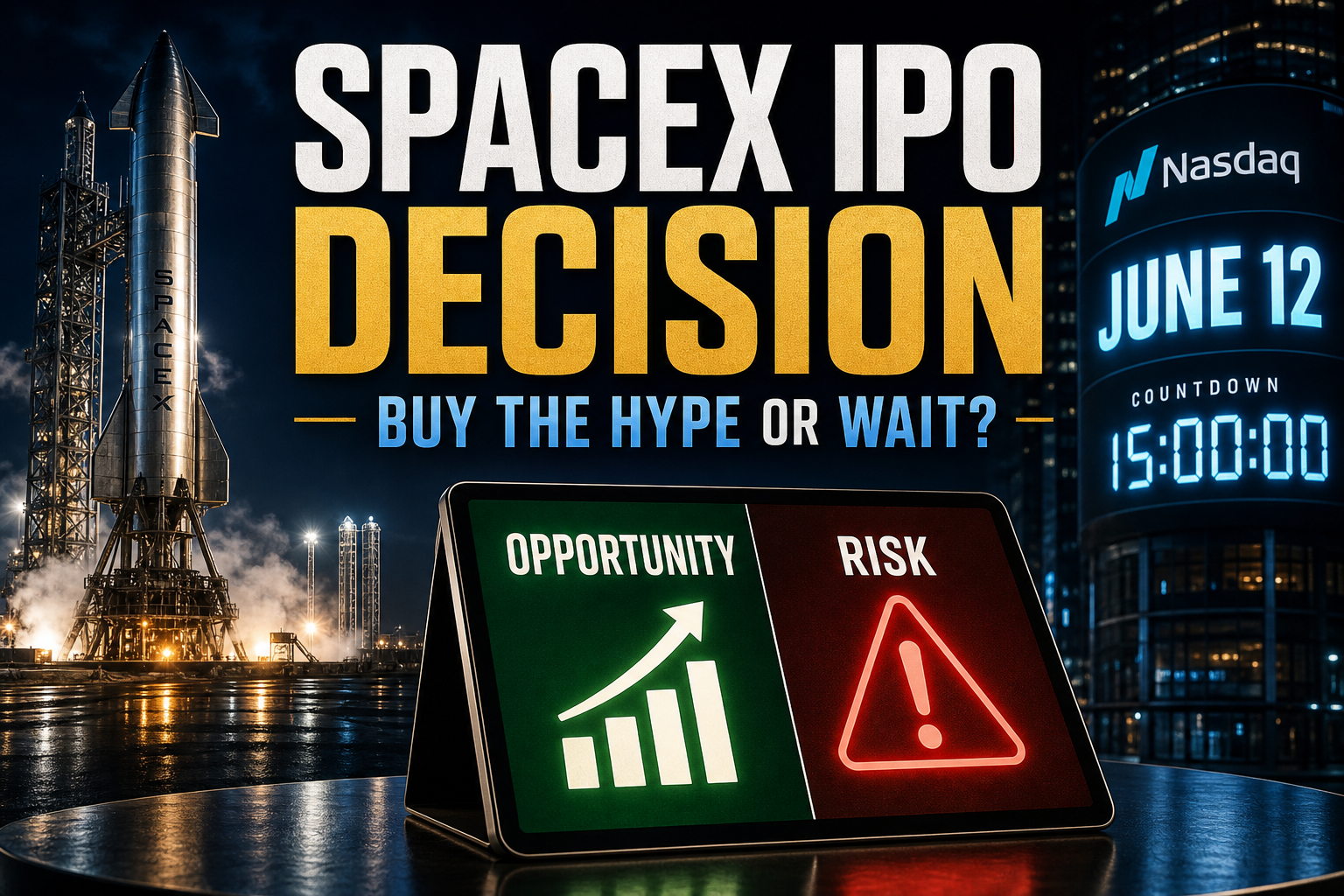
The headline story is simple: Reuters reports SpaceX is targeting a June 12 Nasdaq debut under ticker SPCX. Big date. Big valuation talk. Big excitement.
But if you want to invest like an adult, not a meme account, you need one habit right now: separate confirmed facts from reported or proposed details, then decide whether you are a bold early investor or a disciplined wait-and-verify investor.
This post is built around that exact decision tension: Buy the hype or wait?
Confirmed vs Reported or Proposed
Treat the date, ticker, pricing, float, and valuation package as moving pieces until final prospectus language and listing confirmations are locked.
Confirmed
- A Form S-1 for Space Exploration Technologies Corp appears on SEC EDGAR with filing date May 20, 2026 and accession 0001628280-26-036936.
- FAA documentation shows Starship licensing and environmental reviews remain material to launch cadence and execution.
- SpaceX official updates and launch pages show continued high-cadence launch operations and ongoing Starship and Starlink roadmap activity.
- Investor.gov confirms lockup agreements are common in IPOs and often around 180 days, though company-specific terms vary.
Reported or Proposed
- June 12 Nasdaq debut date.
- Ticker symbol details: SPCX.
- Final IPO pricing, float size, valuation at listing, and exact raise amount.
Why Smart Investors Are Excited
1. Launch economics and operational cadence
SpaceX has built a scale advantage through frequent launch operations and reusability learning loops. In plain English: every additional launch does not just generate revenue; it improves system-level efficiency, scheduling credibility, and customer confidence.
2. Starlink as a recurring revenue engine
Launch revenue can be cyclical. Subscription-style connectivity revenue is different: more recurring, more forecastable, and often valued at higher multiples when growth is credible.
3. Starship optionality
Starship is not just bigger rocket marketing. If cadence, reliability, and cost curves improve, it can unlock heavier payload economics, deeper space logistics, and lower marginal launch cost structures.
4. Defense and government demand
U.S. national-security launch demand and government space programs create a demand floor that many pure commercial ventures do not have. This does not remove risk, but it can reduce dependence on consumer demand cycles.
5. AI infrastructure and networking relevance
This is an editorial analysis point: launch capacity plus satellite networking plus global connectivity could become more relevant as AI demands resilient networks, remote operations, and physical-world data infrastructure.
6. Brand and market demand
SpaceX is one of the rare private companies with global retail awareness and institutional curiosity at the same time. That combination can produce strong initial demand dynamics in public markets.
Why Disciplined Investors Are Cautious
- Valuation risk: A great company can still be a bad investment at the wrong price.
- IPO pop and FOMO mechanics: First-day excitement can detach price from fundamentals.
- Governance and control concentration: Controlled-company structures can limit minority shareholder influence.
- Starship execution risk: Delays, anomalies, licensing friction, or higher-than-expected cost ramps can compress bullish assumptions.
- Starlink assumption risk: Bulls assume durable subscriber growth, retention, pricing power, and manageable competitive pressure.
- Regulation and geopolitics: Launch licensing, spectrum constraints, and geopolitical exposure can affect cadence, margin, and expansion.
- Liquidity and lockup overhangs: IPO structures, insider lockups, and eventual unlock windows can create supply shocks later.
- Key-person risk: SpaceX is highly associated with Elon Musk and a concentrated leadership narrative.
- Capital intensity: Space, network, and advanced R&D require huge, persistent capital.
The Practical Investor Choice: Pick Your Lane Now
You do not need to predict the future perfectly. You need a decision process you can stick to.
Option A: The Bold Investor
Mindset: I want early exposure and accept price turbulence.
- Pre-define max position size before listing day.
- Buy in tranches, not one all-in market order.
- Set hard rules for adding or reducing after first week volatility.
- Assume headline whiplash and avoid emotional averaging.
Option B: The Disciplined Wait-and-Verify Investor
Mindset: I would rather miss the first spike than own unresolved uncertainty.
- Wait for final pricing, float, and early trading stabilization.
- Track first earnings quality signals: margin profile, capex trajectory, and segment clarity.
- Watch lockup timeline and insider selling dynamics.
- Enter only when your checklist, not market mood, says yes.
A Simple 7-Point Checklist Before Any Buy Decision
- Final, filed terms: confirmed date, ticker, float, share class, governance details.
- Valuation sanity: compare implied multiple to growth durability, not just hype.
- Revenue mix quality: launch versus recurring connectivity versus emerging segments.
- Cash and capex path: how much reinvestment is required to sustain growth?
- Execution milestones: Starship cadence, reliability, and regulatory progress.
- Supply overhang: lockup timeline and potential insider sell pressure.
- Your risk plan: position size, time horizon, and a written "what would make me wrong?" rule.
Bottom Line
If this listing proceeds near the reported timeline, SpaceX could become one of the most watched IPOs in years.
But your edge is not being first. Your edge is being clear-headed.
If you are bold, size small and stay systematic. If you are disciplined, wait for proof and buy clarity. Either path can work. FOMO usually does not.
Research Starting Points
Use these as starting points, then verify final IPO documents before making any investment decision.