
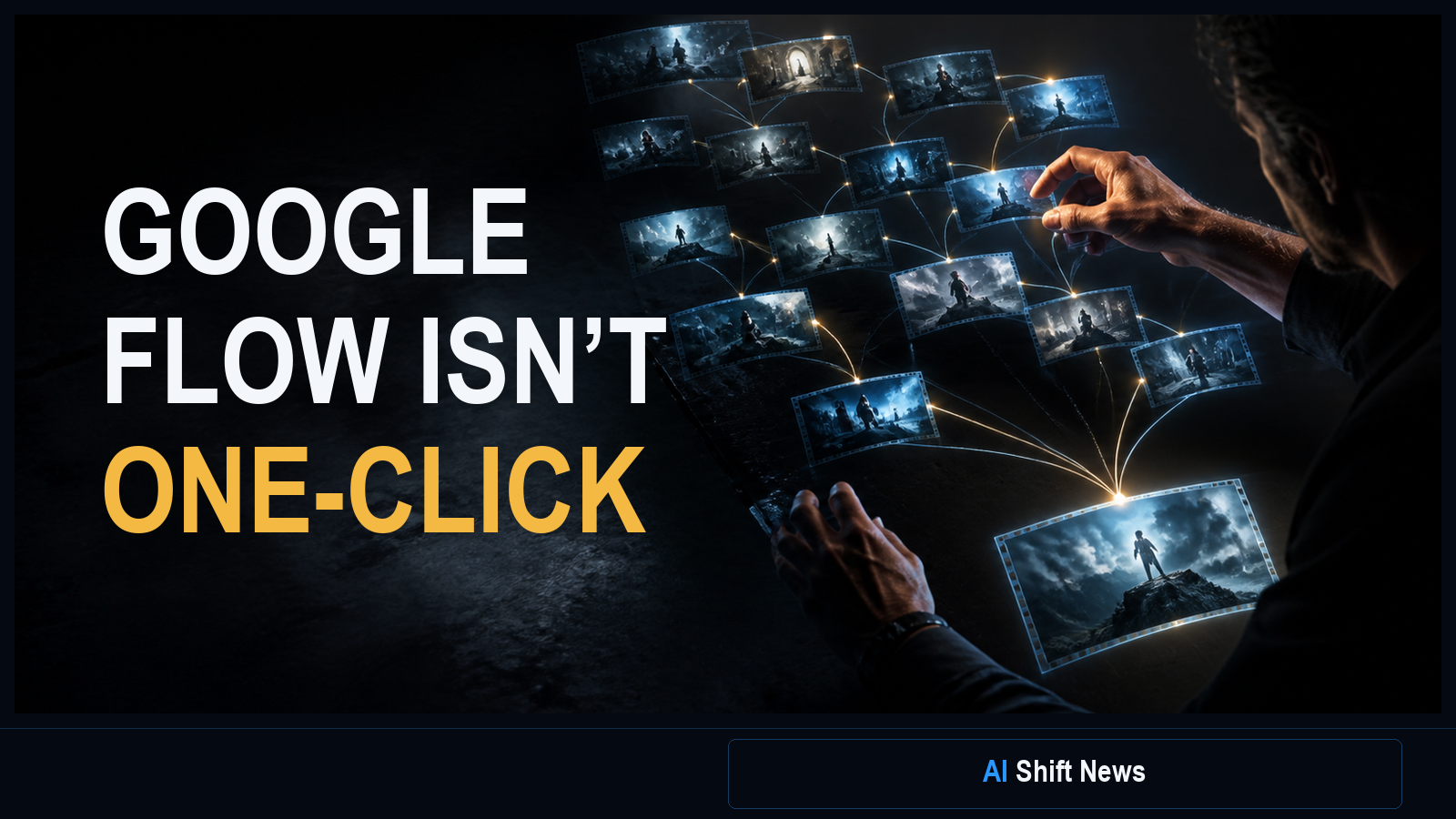
Google says new controls in Flow give creators more ability to refine AI-generated video, including start and end frames, lower-resolution draft rendering and higher-resolution exports. The useful change is not one-click filmmaking. It is having more chances to correct a clip before starting over.
Quick Take: Google is adding more editing controls to Flow, its AI video-creation tool. That matters because the biggest frustration with AI video is often not making a first clip. It is getting the second version to fix one thing without ruining everything else.
Google announced the update on August 27. The company says the new Flow features, powered by Gemini Omni 1.1 Flash, are meant to give creators more control over a video after the first generation. Google describes start and end frames, quicker low-resolution drafts and higher-resolution export options.
That is a better direction for the product.
Most people do not need AI to make a random five-second clip. They need it to help create a usable piece of content: a product demonstration, a short social post, an explainer intro or background footage for a YouTube video. Those jobs require revisions.
For example, imagine you generate a short clip of someone opening a small business storefront. The overall scene works, but the opening image needs to match the final image, the camera angle is too wide or a product is missing. A useful editing tool should let you target that problem rather than force you to rewrite the entire prompt and hope the next version is better.
Google’s announcement is about moving Flow closer to that kind of workflow.
The practical feature to understand is start and end frame control. Instead of asking the model for a scene and accepting whatever transition it invents, a creator can define the beginning and ending visual states more clearly. That should make it easier to shape a short transition or preserve a planned story beat.
Google also says Flow users can test concepts in lower-cost 360p before committing to a larger render. When a version is worth keeping, users can download at 720p or export at 1080p or 4K for further editing workflows.
There are still limits. More controls do not guarantee that every edit will preserve faces, objects, text, lighting or continuity exactly as intended. AI video can still produce strange details, inconsistent scenes and visual mistakes that need human review. It can also create copyright, consent and disclosure questions, especially when a video is used commercially or could be mistaken for real footage.
The practical way to try these tools is to use them on small, low-risk jobs first. Create a short B-roll clip, an internal concept video or a draft social visual. Give the AI a clear brief: subject, setting, action, camera movement, duration and what must not change. Then inspect the result frame by frame before publishing.
The evidence supports that Google is rolling out additional Flow controls designed to improve creative revision. It does not prove that AI video production is automatic, predictable or ready to replace an editor.
For creators, the real upgrade is simple: fewer full restarts when a nearly good clip needs one specific fix.
Bottom Line
Google Flow's added controls can reduce restarts and improve iteration, but creators still need to make the editorial decisions that turn generated clips into a coherent finished video.