 Shift News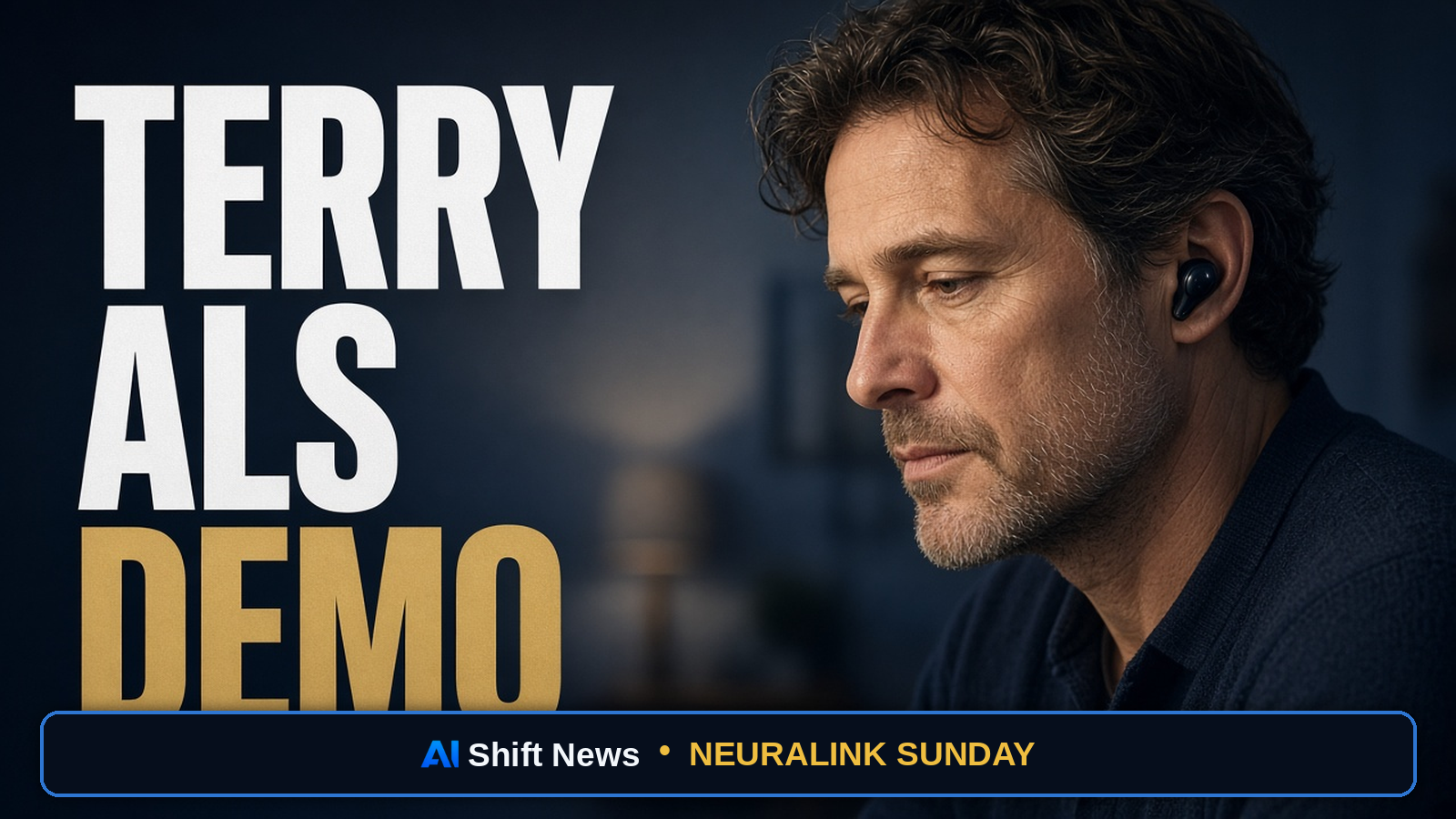
Neuralink’s official September 18, 2026 video introduces ALS participant Terry (bulbar-onset ALS, diagnosed 2024) using an investigational speech-motor N1 implant so mimed, then imagined, speech becomes audible in a reconstructed natural voice. That is a company clinical-trial packaging receipt for the VOICE early-feasibility study (ClinicalTrials.gov NCT07224256). It is not FDA commercial approval, not a peer-reviewed accuracy or latency paper, and not proof the system works for every speech-impaired patient.
Neuralink — Speaking With The Mind — Neuralink’s official channel video (published Sept. 18, 2026) introducing VOICE trial participant Terry. This is company clinical-trial packaging; the receipts are the video’s own investigational disclaimer, ClinicalTrials.gov, and Neuralink’s Breakthrough Device update.
At a glance
Demo ≠ approval. An official thought-to-speech video inside a named early-feasibility study is real progress packaging. It is not commercial clearance, and it is not a peer-reviewed efficacy table.
- Confirmed: Terry (bulbar-onset ALS, 2024 diagnosis); mime-then-think training path; investigational / not-FDA-approved disclaimer in the video description.
- Confirmed (registry): NCT07224256 recruiting; ~6 estimated; safety AEs primary at 12 months; CWPM secondary.
- Fence: Breakthrough Device Designation ≠ commercial clearance; personal demo ≠ cohort-wide proof.
What the official video actually claims
On September 18, 2026, Neuralink’s own channel posted Speaking With The Mind. The description identifies Terry as diagnosed with bulbar-onset ALS in 2024. He can still move his mouth and body, but speech impairment has made him hard for loved ones to understand. Through the VOICE trial, he uses a Neuralink implant to help fine-tune a brain-to-voice interface — first by miming speech, then by thinking the words and hearing them in a reconstructed natural voice.
The same description is the house fence in Neuralink’s own words: devices are investigational and have not been approved by the FDA or other regulators; voluntary trial participants share personal experiences that may not reflect all participants or future outcomes. Report the demo. Keep the disclaimer attached.
What the trial registry proves (and does not)
ClinicalTrials.gov lists VOICE: An Early Feasibility Study of a Precise Robotically Implanted Brain-Computer Interface for Communication Restoration as NCT07224256, sponsored by Neuralink Corp, status recruiting, estimated enrollment six. The N1 Implant is described as a skull-mounted wireless rechargeable implant whose electrode threads are placed by the R1 Robot. Primary outcomes are proportions of subjects with device-related and procedure-related adverse events at the 12-month visit. A secondary efficacy measure for the implant is monthly maximum correct words per minute.
Those are study design facts. They are not published accuracy results. Do not invent word-per-minute charts from a marketing cut.
Breakthrough Device is a path, not a product stamp
Neuralink’s May 2025 update says the company received FDA Breakthrough Device Designation to help restore communication for people with severe speech impairment (ALS, stroke, spinal cord injury, and other neurological conditions listed in that post). Breakthrough designation speeds FDA interaction for promising devices. It is not the same as PMA/510(k) commercial clearance. House rule: never collapse “Breakthrough” into “approved.”
Why we are covering VOICE again
AI Shift News already carried an earlier VOICE recruiting angle. We are revisiting it because the new receipt is the official company video with a named participant and an on-record investigational disclaimer — not a third-party recap of the same registry page. This is not a Blindsight, Audrey portrait, wheelchair demo, or transdural N1 story.
Bottom Line
VOICE is the right Neuralink Sunday speech story: a named ALS participant, a brain-to-voice training path, and a registered early-feasibility study. The honest file stops at company trial packaging. Prefer Neuralink’s own investigational language and ClinicalTrials.gov endpoints over “mind speech is here” thumbnails. That is the fence: thought-to-speech demo inside VOICE — not FDA approval.