
 Shift News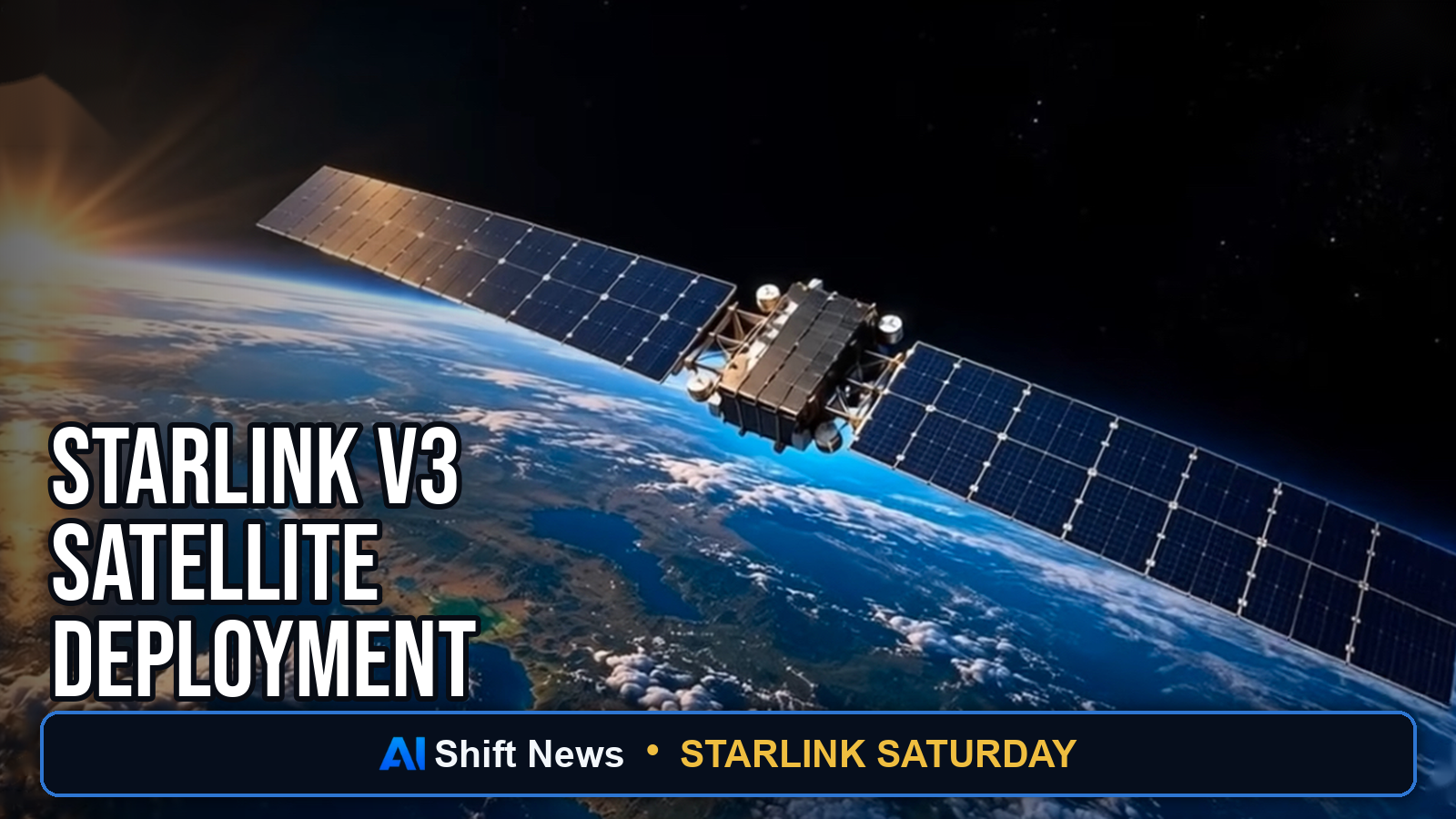
SpaceX says Starship Flight 14, on Monday, September 28, 2026, put 26 Starlink V3 satellites into orbit and contacted every one of them. Those satellites are in checkout and still have to raise their orbits before they serve customers. The YouTube title’s “first operation” and “release” is the channel’s packaging, not a SpaceX service-start date.
The Launch Pad — “DEPLOY! SpaceX Release First Operation Starlink V3 Satellites” (FFg1EyXGgP8). oEmbed title verified Oct 3, 2026. Upload date was not in the oEmbed response, so this page does not state one. Creator packaging is not a SpaceX service-start date.
Honest fence (read first): This Starlink Saturday flagship is the Flight 14 receipt: date, count, deploy, and contact from SpaceX’s Flight 14 page. On Monday, September 28, 2026, at 7:48 a.m. CT, Starship lifted off from Starbase, Texas. SpaceX says it deployed 26 Starlink V3 satellites. Contact was made with every satellite over laser links, ground stations, and Starlink user terminals. Those satellites will conduct on-orbit checkouts and raise their orbits before they begin serving customers. The YouTube title is packaging, not proof of customer service. This page does not state a customer-service date, a speed, a Tbps figure, or a “1,000 satellites by Q2 2027” line, because the Flight 14 page fetched for this draft does not.
What SpaceX actually printed
On the Flight 14 page, SpaceX writes that on Monday, September 28 at 7:48 a.m. CT, Starship lifted off from Starbase, Texas on its 14th flight and first attempt to go to orbit. The same page calls this the first orbital Starship flight and the first to deliver meaningful payload to orbit, with 26 Starlink V3 satellites.
The path to that orbit was a second burn, not a straight shot. SpaceX says that after one Raptor vacuum engine shut down early in ascent, Starship still reached its planned, passively safe suborbital trajectory. The team then gave a go for orbital operations. A single sea-level Raptor did an orbit-insertion burn, and Starship entered orbit around Earth for the first time. After a brief coast, it deployed all 26 Starlink V3 satellites.
SpaceX’s approximate timeline on that page puts payload deploy start at 00:34:07 and payload deploy complete at 01:04:39. The page labels those times approximate.
The contact line, in SpaceX’s words: “Contact was made soon after with every satellite over laser links, ground stations, and Starlink user terminals.” The next sentence is the fence: “The satellites will now conduct on-orbit checkouts and raise their orbits before they begin serving customers.”
What the September 15 update adds — and does not
Twelve days before the flight, SpaceX’s “Starship to Orbit” update (September 15, 2026) said initial orbital flights would still begin on a passively safe suborbital trajectory and need a second burn to reach orbit. Flight 14’s page says that is what happened. Use the flight page for the result. The September 15 note is design context, not a customer-service announcement, and it does not name a V3 speed or a service date.
What the video is
The embed is The Launch Pad, FFg1EyXGgP8. The oEmbed title is “DEPLOY! SpaceX Release First Operation Starlink V3 Satellites.” That “first operation” and “release” wording is the channel’s packaging. SpaceX says the 26 satellites are in orbit and in checkout, not that they have started serving customers. This draft does not claim a service-start date because the flight page does not give one.
What this does not prove
- In orbit ≠ on the customer network.
- Contact over lasers, ground stations, and user terminals ≠ a published speed test.
- Checkout and orbit-raising still ahead ≠ a date you can put on a calendar.
- No Tbps figure, no “1,000 satellites by Q2 2027,” and no V3 throughput number appears on the Flight 14 page fetched for this draft. None is added here.
- The YouTube title is not the H1 and not the SEO title.
Bottom line
Starship Flight 14 put 26 Starlink V3 satellites in orbit on September 28, 2026, and SpaceX says it reached every one of them. Customer service is still ahead of those satellites. That is the whole claim.
Sources
- SpaceX — Starship Flight 14 (page rendered Oct 3, 2026; HTML shell last-modified Oct 1, 2026). Primary receipt.
- SpaceX — “Starship to Orbit,” September 15, 2026. Preflight design note only. The flight page wins where they differ.
- The Launch Pad — oEmbed title “DEPLOY! SpaceX Release First Operation Starlink V3 Satellites.” Embed, not the receipt.