
 Shift News
Beginner Guide
How to Learn AI Without Overwhelm
You do not need to learn everything. You need a calm path from confused to capable.
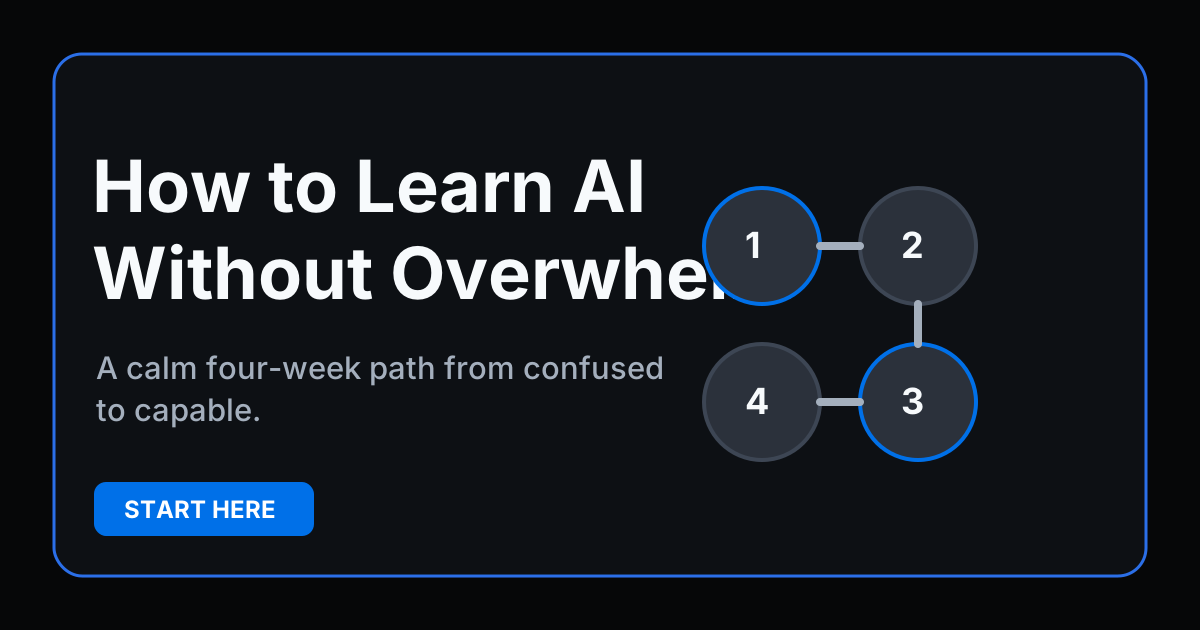
AI feels overwhelming because the news moves faster than normal human attention. The fix is not to read everything. The fix is to build a small practice loop.
The four-week path
Week 1: Use AI as a thinking partner
Ask it to explain confusing topics, rewrite emails, summarize articles, and help you plan your day. Learn what good and bad answers feel like.
Week 2: Use AI on your own material
Give it notes, drafts, transcripts, PDFs, or messy ideas. Ask for summaries, checklists, outlines, and next steps.
Week 3: Build reusable prompts
Save prompts for tasks you repeat: newsletter drafts, research summaries, meeting follow-ups, product descriptions, or social posts.
Week 4: Automate one tiny handoff
Connect two tools or create one repeatable workflow. Start with something simple, like turning saved links into draft notes.
The three skills that matter first
- Clear task framing: tell the AI what you want, who it is for, and what good output looks like.
- Iteration: ask for shorter, clearer, more practical, more specific, or better structured versions.
- Judgment: check facts, compare outputs, and never outsource decisions blindly.
What to ignore for now
Ignore model leaderboard debates, complicated prompt formulas, tool-stack obsession, and people yelling that every job is dead by next Thursday. None of that helps you become useful with AI today.
Your first exercise
- Open one AI assistant.
- Paste a messy note, email, article, or idea.
- Ask for a clear summary and three next actions.
- Ask it to make the answer more practical.
- Save the prompt if it helped.
Bottom line
You learn AI by turning it into useful repetitions. One task. One improvement. One saved workflow. That is enough to start.