
 Shift News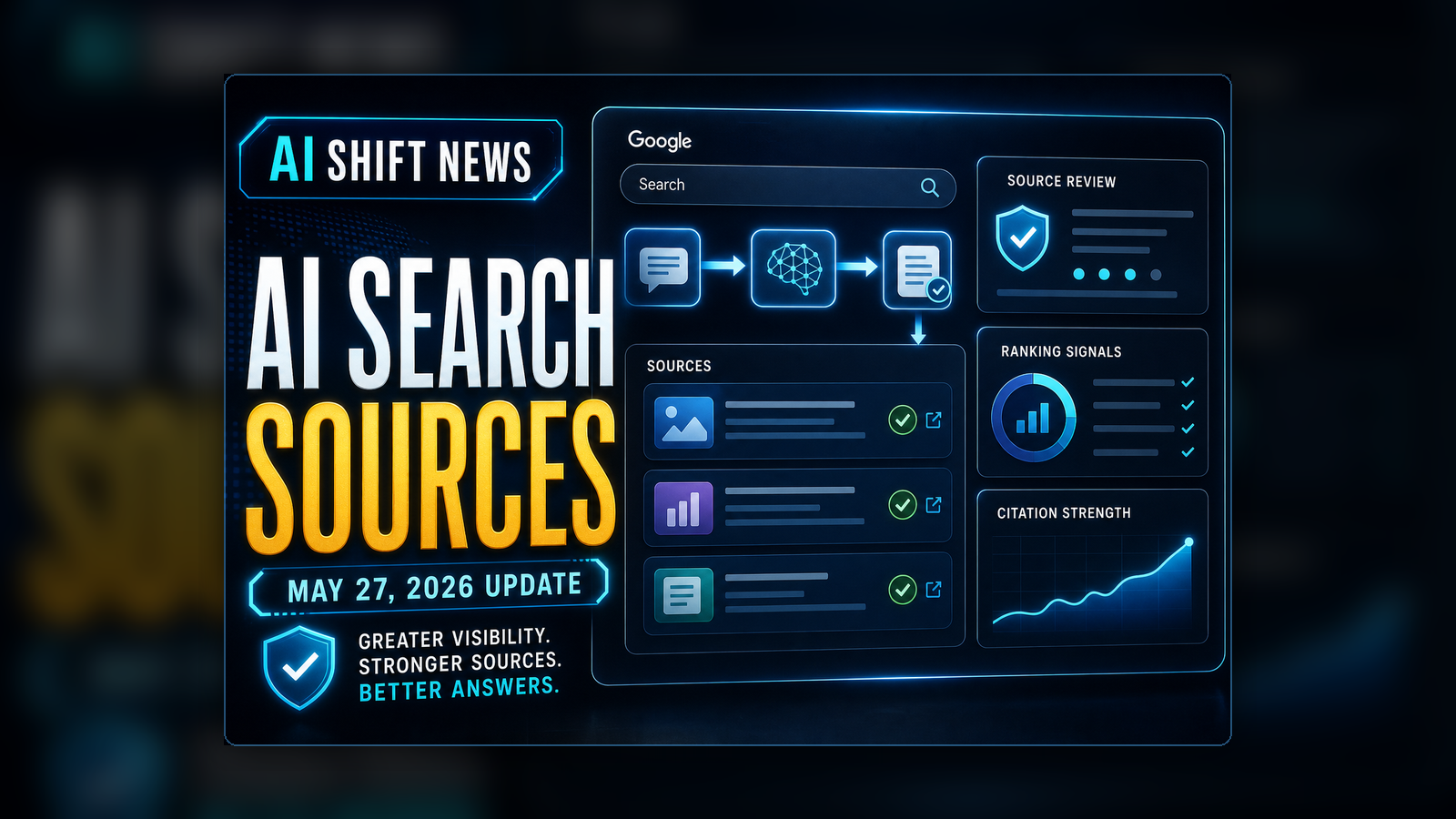
A lot of AI content errors happen in the last mile. A draft sounds right, a summary looks clean, and then a claim gets copied without checking the original source.
Google's AI Search update puts more attention on original and preferred sources. For operators, that is a prompt to build a simple verification workflow: find the claim, open the source, check the details, and approve only after the evidence is clear.
What Changed
- Google announced new ways to surface preferred and original sources in AI Search.
- The update is designed to help users move from AI summary to source confirmation faster.
- For teams, this can reduce unverified claims in newsletters, briefs, posts, and client updates.
Why This Matters
AI summaries are useful, but they are not proof. If your content includes dates, numbers, named companies, product claims, investment claims, legal language, medical language, or anything reputation-sensitive, it needs a source check.
Copy This Workflow
Trigger
Any claim-heavy paragraph in a draft, newsletter, blog post, client note, or social caption.
Tools
AI Search, the original source document, your CMS or draft editor, and a review checklist.
Human Checkpoint
Final publish approval stays manual, especially on sensitive or high-risk claims.
The Step-By-Step Version
- Pull the top claim. Start with the sentence that would matter most if it were wrong.
- Open the original source card. Do not rely on the AI summary alone.
- Verify the date, entity, number, and context. Make sure the claim says what the source actually says.
- Paste the citation into the draft. Keep the source link near the claim while editing.
- Flag sensitive claims for second review. Investing, legal, medical, safety, and customer-facing claims need a human pass.
- Publish only after approval. The workflow can speed up checking, but it should not auto-publish.
Where This Helps Most
- AI news roundups where product names, launch dates, and source details change quickly.
- Client reports that summarize several official announcements.
- Newsletter drafts that turn research into plain-English takeaways.
- Content teams that need a repeatable process instead of a different fact-checking method every time.
Bottom Line
Treat AI Search as a source-verification helper, not a final authority. Use it to move faster from claim to source, then keep the publish decision human.