
 Shift News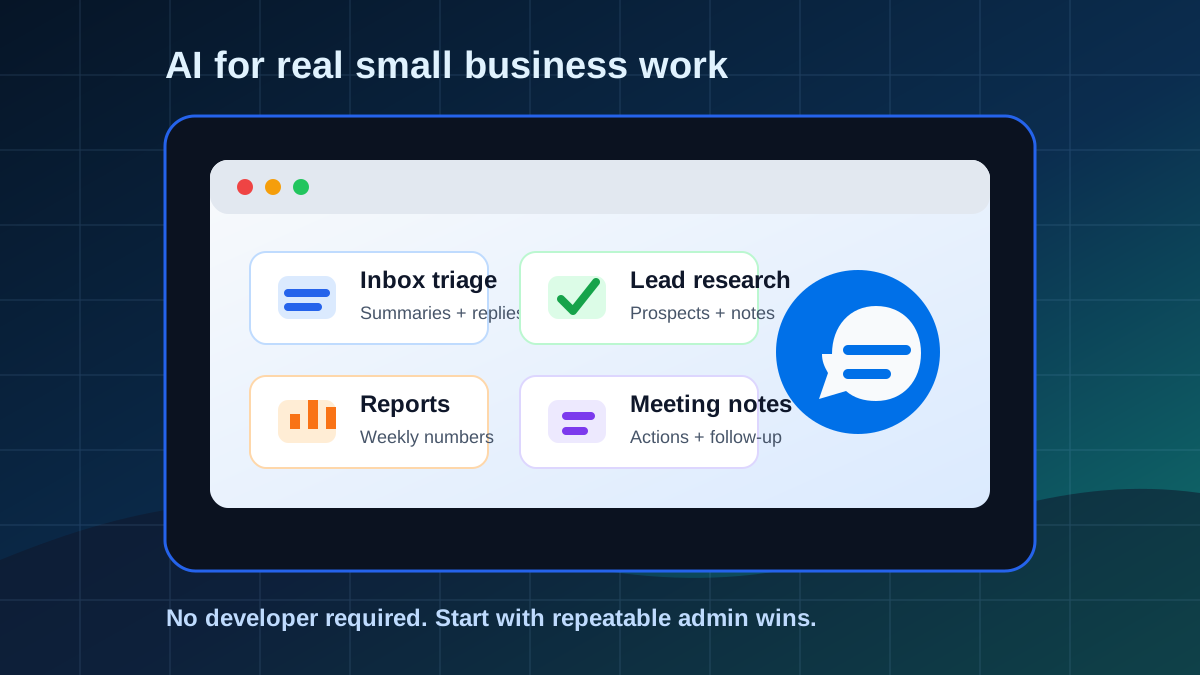
The fastest small-business AI wins usually do not come from a big software build. They come from using tools like ChatGPT, Claude, Gemini, Perplexity, Google Workspace, Microsoft Copilot, Zapier, or Make to clean up repetitive work that already happens every week.
The goal is not to replace your judgment. The goal is to turn messy inputs into organized drafts, checklists, summaries, and next actions you can review quickly.
Start With Work You Already Repeat
AI works best when the task has a predictable shape. If you do the same kind of admin work every day, that is a better starting point than asking AI to invent a whole business strategy from scratch.
Inbox
Summarize long messages, identify urgency, draft polite replies, and turn customer questions into follow-up tasks.
Sales
Research leads, rewrite outreach, personalize proposals, and compare customer notes before a call.
Operations
Convert meeting notes into action items, draft SOPs, summarize reports, and organize recurring admin.
The Safe First Workflow
Pick one task where a rough draft is useful and a human can approve the final output. That gives you speed without handing the business keys to an unreviewed automation.
Try This This Week
- Choose one recurring task: customer reply drafts, lead notes, meeting summaries, or weekly reports.
- Collect three real examples: use actual work samples with private details removed where needed.
- Ask for a structured draft: request bullets, decisions, questions, and next steps.
- Review the output: correct tone, facts, pricing, promises, dates, and customer-specific details.
- Save the prompt: keep the version that worked so the task becomes repeatable.
Use AI Where Mistakes Are Easy To Catch
A good early AI workflow should make errors visible. Drafting an email is safer than sending one automatically. Summarizing a report is safer than changing prices. Building a task list is safer than making a commitment to a customer.
- Let AI create a first draft, then have a person approve it.
- Use AI to organize information, not secretly make business decisions.
- Keep private customer data out of tools unless you understand the privacy settings.
- Check facts, numbers, dates, names, and anything that affects money or trust.
Where Automation Fits
Once a manual AI workflow works several times, you can connect it to tools you already use. A simple automation might copy form submissions into a spreadsheet, ask AI to create a summary, and leave a draft reply for review.
Simple Rule
Do the workflow manually with AI first. If it saves time three times in a row, then consider automating the handoff between your form, inbox, spreadsheet, CRM, or task manager.
What Not To Do First
Do not start by hiring someone to build a custom chatbot, replacing your CRM, or wiring AI into customer communication with no review step. That can get expensive fast and creates risk before you know what actually helps.
Bottom Line
Small businesses should treat AI like a practical assistant for repeated work. Start with drafts, summaries, checklists, and research. Keep a person in the loop. Only automate after the workflow proves itself.