
 Shift News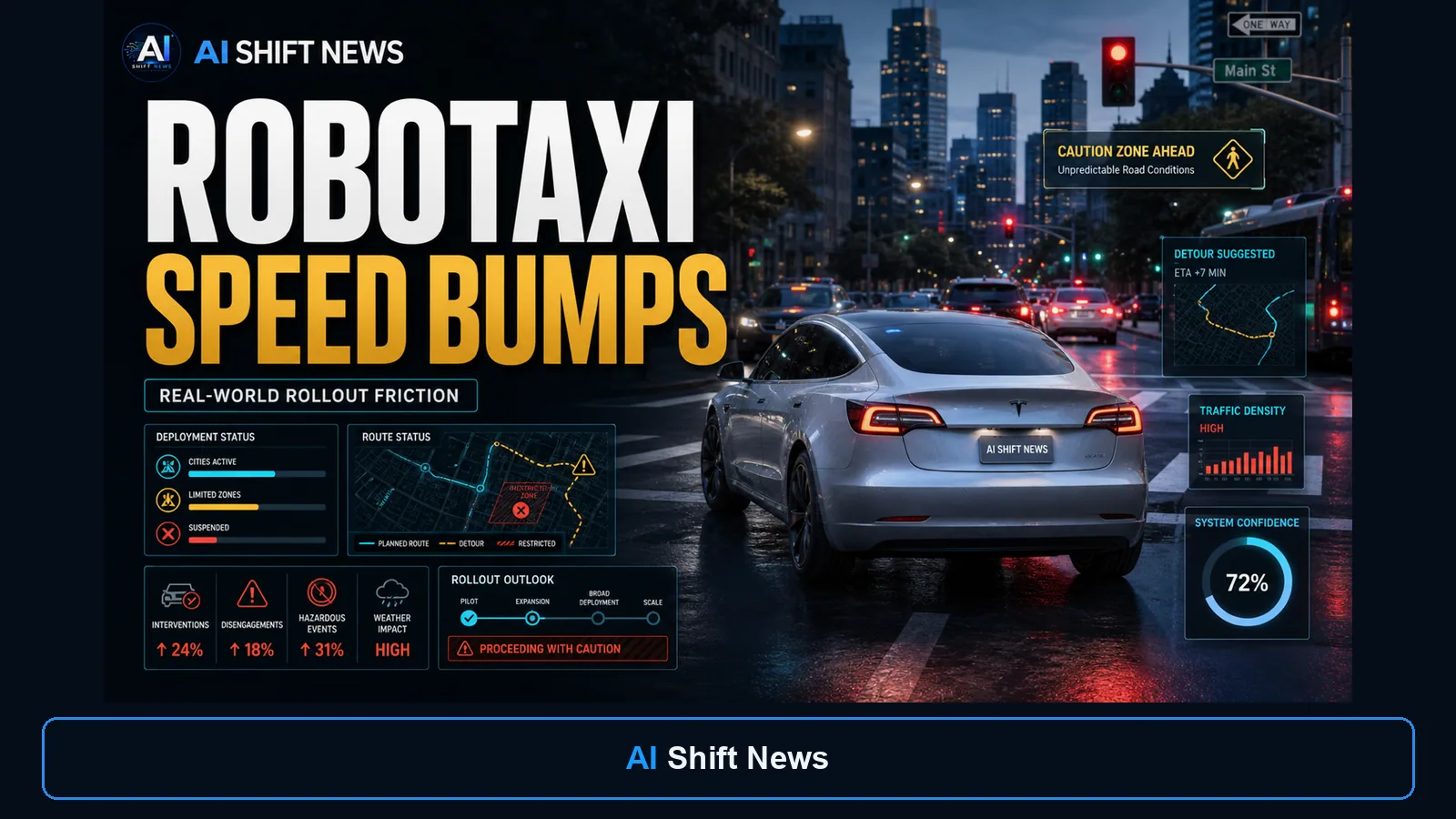
Despite Elon Musk's long-standing promises, Tesla's robotaxi fleet reportedly consists of only 59 vehicles operating in three Texas cities. This limited scale highlights the significant gap between ambitious predictions and the complex reality of deploying fully autonomous ride-hailing services. Operators and small business owners should note that breakthroughs in AI often take longer to scale and prove profitable than initial hype suggests, necessitating a sober assessment of immediate application versus future potential.
What Changed
Elon Musk has talked about Tesla robotaxis for years, promising a revolution in transportation. But a recent report by the LA Times reveals that the actual rollout is moving at more of a crawl than a sprint.
What changed? Tesla's much-hyped robotaxi fleet consists of just 59 vehicles. These autonomous cars are currently operating only in three cities in Texas.
Why It Matters
Why it matters: This limited deployment contradicts the grand projections often associated with Tesla's full self-driving capabilities. For smart non-technical readers, creators, operators, and small business owners, this is a firm reminder: The deployment of advanced AI technologies into complex real-world services like ride-hailing is incredibly difficult. The gap between initial announcements and operational reality can be vast.
Who should care: Anyone looking to integrate advanced AI into core business operations, especially those involving public safety or complex logistics, should pay close attention. It underscores the importance of evaluating technology based on proven, scaled performance rather than solely on future vision.
What To Watch Next
What to try next: Instead of waiting for widespread robotaxi availability, focus on applying AI in areas with clearer, more immediate ROI. Think about automating specific, contained tasks in your workflow rather than trying to overhaul an entire service with unproven, large-scale AI. Understand that scaling AI in the physical world has unique challenges that differ from software deployment.
Risk/Limitation: The report suggests that despite technological advancements, gaining regulatory approval, ensuring public safety, and managing public perception for fully autonomous vehicles remain significant hurdles. Tesla's approach of focusing on Texas hints at navigating less restrictive state regulations.
Watch next: Keep an eye on concrete expansion announcements, not just conceptual ones. Look for evidence of geographical scaling, increased fleet numbers, and detailed safety records from all autonomous driving companies.
Bottom Line
Tesla's robotaxi rollout shows the gap between autonomous driving promises and the operational work required to make real-world ride-hailing dependable.